Alliance Française Calgary - Curriculum Teens

Curriculum Teens

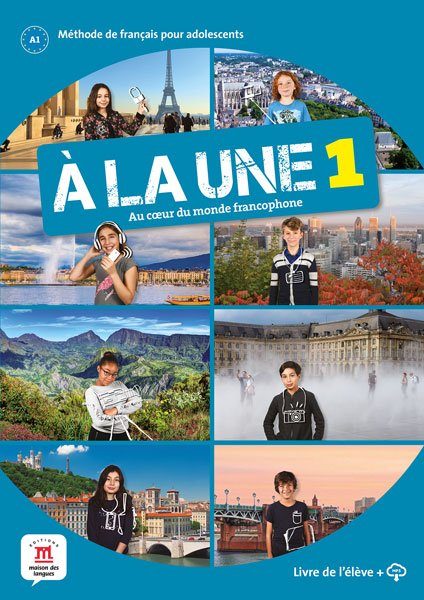
A1 = 4 levels with A La Une 1 = 84 hours

A1.1 = Units 0, 1 & 2 (September 2022)
A1.2 = Units 3 & 4
A1.3 = Units 5 & 6
A1.4 = Units 7 & 8
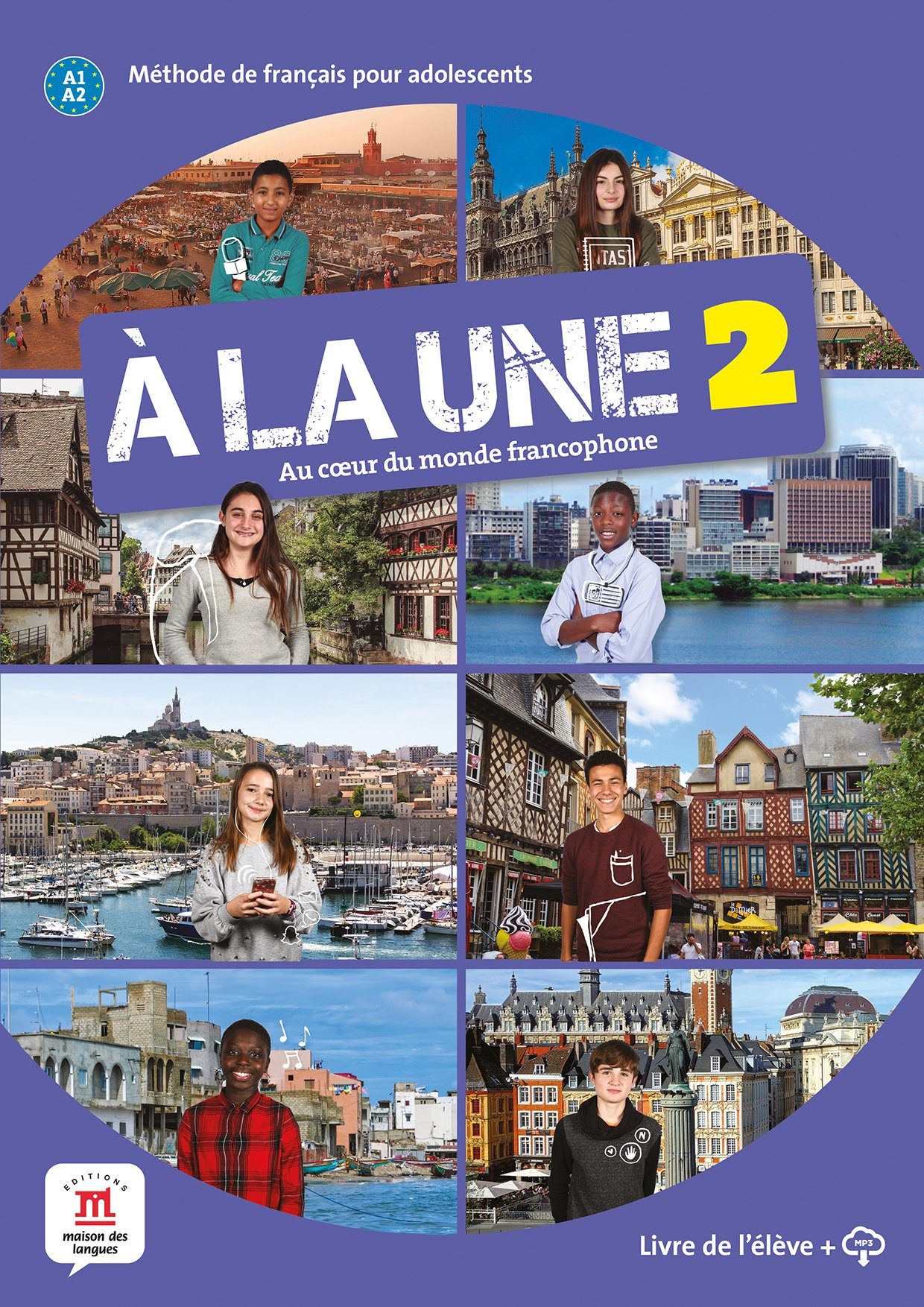
A2 = 4 levels with A La Une 2 = 84 hours

A2.1 = Units 1 & 2
A2.2 = Units 3 & 4
A2.3 = Units 5 & 6
A2.4 = Units 7 & 8

B1 Part 1 = 4 levels with A La Une 3 = 84 hours

B1.1 = Units 1 & 2
B1.2 = Units 3 & 4
B1.3 = Units 5 & 6
B1.4 = Units 7 & 8

B1 Part 2 = 4 levels with A La Une 4 = 84 hours

B1.5 = Units 1 & 2
B1.6 = Units 3 & 4
B1.7 = Units 5 & 6
B1.8 = Units 7 & 8

A1.1 - Units 0, 1 & 2

Communication

  • Greetings and self-introduction
  • Introducing someone else
  • Learning the French alphabet, pronunciation, and spelling
  • Understanding and using classroom instructions
  • Discussing birthdays, holidays, and festivals
  • Talking about preferences and animals

Grammar

  • Key verbs : s’appeler, avoir, aimer, adorer, détester, habiter
  • Formulating questions
  • Informal and formal "you": tu and vous 
  • Understanding masculine and feminine forms

A1.2 - Units 3 & 4

Communication

  • Describing countries you know or would like to visit
  • Discussing nationalities and languages
  • Talking about yourself and your interests
  • Describing your family members
  • Describing someone
  • Talking about the clothes you wear
  • Describing people's personalities

Grammar

  • Using verbs such as être, porter, and mettre
  • Understanding prepositions and their usage
  • Learning about adjectives and their agreement with nouns
  • Differentiating between c'est and il est
  • Using negation in French
  • Using stressed pronouns correctly
  • Understanding possessive adjectives and how they agree with nouns
  • Using intensity adverbs in French

A1.3 - Units 5 & 6

Communication

  • Talking about school subjects and schedule
  • Discussing middle school
  • Talking about sports and activities
  • Describing daily routines
  • Talking about hobbies

Grammar

  • Using "quel" for questioning
  • Using "il y a" and "il n'y a pas" to indicate presence or absence of something
  • Verbs: faire, jouer, lire, sortir, dormir, prendre, aller
  • Telling time
  • Using reflexive verbs


A1.4 - Units 7 & 8

Communication

  • Describing one's city and neighborhood
  • Giving directions and orientation
  • Going shopping
  • Talking about body parts and physical sensations
  • Expressing emotions and feelings

Grammar

  • Using the pronoun "on"
  • Key verb "pouvoir"
  • Applying prepositions of place
  • Using the imperative tense
  • Asking questions with "combien"
  • Using "il faut + infinitive" contruction
  • Using "pour + infinitive" structure
  • Using "quand + present" in sentences


A2.1 - Units 1 & 2

Communication

  • Discussing food and personal taste
  • Talking about meals and flavors
  • Creating a shopping list and placing an order
  • Discussing education and professions
  • Presenting summer plans
  • Offering a knowledge exchange

Grammar

  • Partitive articles
  • Using "aller à/chez"
  • Expressing "avoir besoin de"
  • Using the futur proche tense
  • Verbs: vouloir, savoir, connaître
  • Using "j'aimerais/je voudrais"
  • Expressing "aider à"

A2.2 - Units 3 & 4

Communication

  • Talking about your travels
  • Discussing the weather
  • Describing and giving directions
  • Explaining why and how to sort waste
  • Understanding a tutorial
  • Proposing to exchange objects

Grammar

  • Using the past tense passé composé with the auxiliary verb "avoir"
  • Using prepositions of place
  • Placing adjectives correctly
  • Saying "it's better to..."
  • Using verbs such as "jeter" (to throw away) and "vendre" (to sell)
  • Using direct object pronouns
  • Using discourse markers


A2.3 - Units 5 & 6

Communication

  • Describing objects, talking about future objects
  • Talking about social networks and applications
  • Talking about internet languages
  • Giving advice
  • Describing an apartment, talking about furniture
  • Describing and comparing objects
  • Talking about household chores

Grammar

  • Expressing prohibition
  • Near future tense (reminder)
  • Compound past tense: être (to be)
  • Indefinite adjectives
  • Complex negation
  • Comparative
  • Superlative
  • Pronoun Y
  • Expressing obligation: devoir + infinitive, être obligé de


A2.4 - Units 7 & 8

Communication

  • Talking about narrative genres, types of movies
  • Expressing one's opinion
  • Telling stories
  • Summarizing and recommending
  • Talking about world problems
  • Advocating, creating awareness posters
  • Explaining how to help others, talking about solidarity

Grammar

  • Imperfect tense
  • Time markers
  • Asking questions: different types
  • Venir de / être en train de + infinitive
  • Direct and indirect object pronouns
  • Imperative


B1.1 - Unités 1 & 2

Communication

  • Talking about dishes and dietary restrictions
  • Talking about food preferences and habits
  • Talking about recipes and waste
  • Talking about vacations, telling stories
  • Describing cities and talking about historical sites
  • Talking about experiences and recounting travel itineraries

Grammar

  • Partitive articles
  • Pronoun EN
  • Expressing quantity
  • Alternation between compound past and imperfect tenses
  • Relative pronouns
  • Time expressions

B1.2 - Unités 3 & 4

Communication

  • Talking about future housing
  • Talking about education and future cities
  • Imagining life in the future
  • Talking about family relationships
  • Talking about one's school and teachers
  • Talking about friendships

Grammar

  • Simple future tense
  • Time markers
  • Hypothesis expressions: si + present + future
  • Time expressions
  • More / less (review)
  • Everyone / No one
  • Asking and offering
  • Verbs with prepositions
  • Direct and indirect object pronouns
  • When and during


B1.3 - Unités 5 & 6

Communication

  • Discuss sports and competitions
  • Talk about the effects of sports on the body
  • Discuss objects related to sports
  • Discuss communication media
  • Talk about fake news and news topics

Grammar

  • Already/never
  • Express certainty
  • Pronoun "ça"
  • Also/In addition
  • Express opposition
  • Continuity and discontinuity
  • Purpose and cause
  • Conditional present tense


B1.4 - Unités 7 & 8

Communication

  • Talk about music genres and musical instruments
  • Talk about memories and musical composition
  • Give your opinion
  • Talk about your origins
  • Discuss a historical period
  • Discuss the origin of words and cultural similarities

Grammar

  • Exclamatory sentence
  • Temporal subordinate clauses
  • Express opposition
  • Express your opinion
  • Hypothesis "si + imparfait + conditionnel"
  • Imparfait values
  • Agreement of the past participle
  • Alternation between passé composé and imparfait
  • Relative pronouns
  • Possessive pronouns


B1.5 - Unités 1 & 2

Communication

  • Talking about back-to-school and emotions
  • Discussing classroom relationships and the election of delegates
  • Discussing fashion styles and appearances
  • Talking about one's own era and another era
  • Discussing intergenerational differences and slang

Grammar

  • Direct and indirect object pronouns
  • Verbs with 2 complements
  • Review of the pronoun EN
  • Pronouns in the imperative
  • The use of n'importe qui/quoi/où/quand/quel(le)
  • Double pronouns
  • Use of the adverb ENCORE
  • Present and past conditional
  • Adverbs of manner

B1.6 - Unités 3 & 4

Communication

  • Talk about advertising
  • Reflect on the impact of media on one's ideas
  • Fight against prejudices
  • Talk about challenges and solutions
  • Talk about immigration and integration
  • Talk about the diaspora

Grammar

  • Express opposition
  • Emphasize
  • Express condition
  • Report speech
  • Express purpose
  • Subjunctive present


B1.7 - Unités 5 & 6

Communication

  • Talking about disasters and endangered species
  • Talking about landscapes and vegetation
  • Talking about academic results, life paths, job offers

Grammar

  • Cause and consequence
  • Negative imperative (review)
  • It is necessary that + subjunctive
  • Gerund
  • Not + verb + only
  • Preposition "Sans"
  • Pluperfect
  • The goal


B1.8 - Unités 7 & 8

Communication

  • Talking about artistic activities, shows
  • Talking about artists
  • Talking about social life, family events
  • Talking about history

Grammar

  • Compound relative pronouns
  • Expressing inclusion and exclusion
  • Expressing preferences
  • If + pluperfect
  • Reported speech in present and past tense
  • Passive voice